Closing Sequence

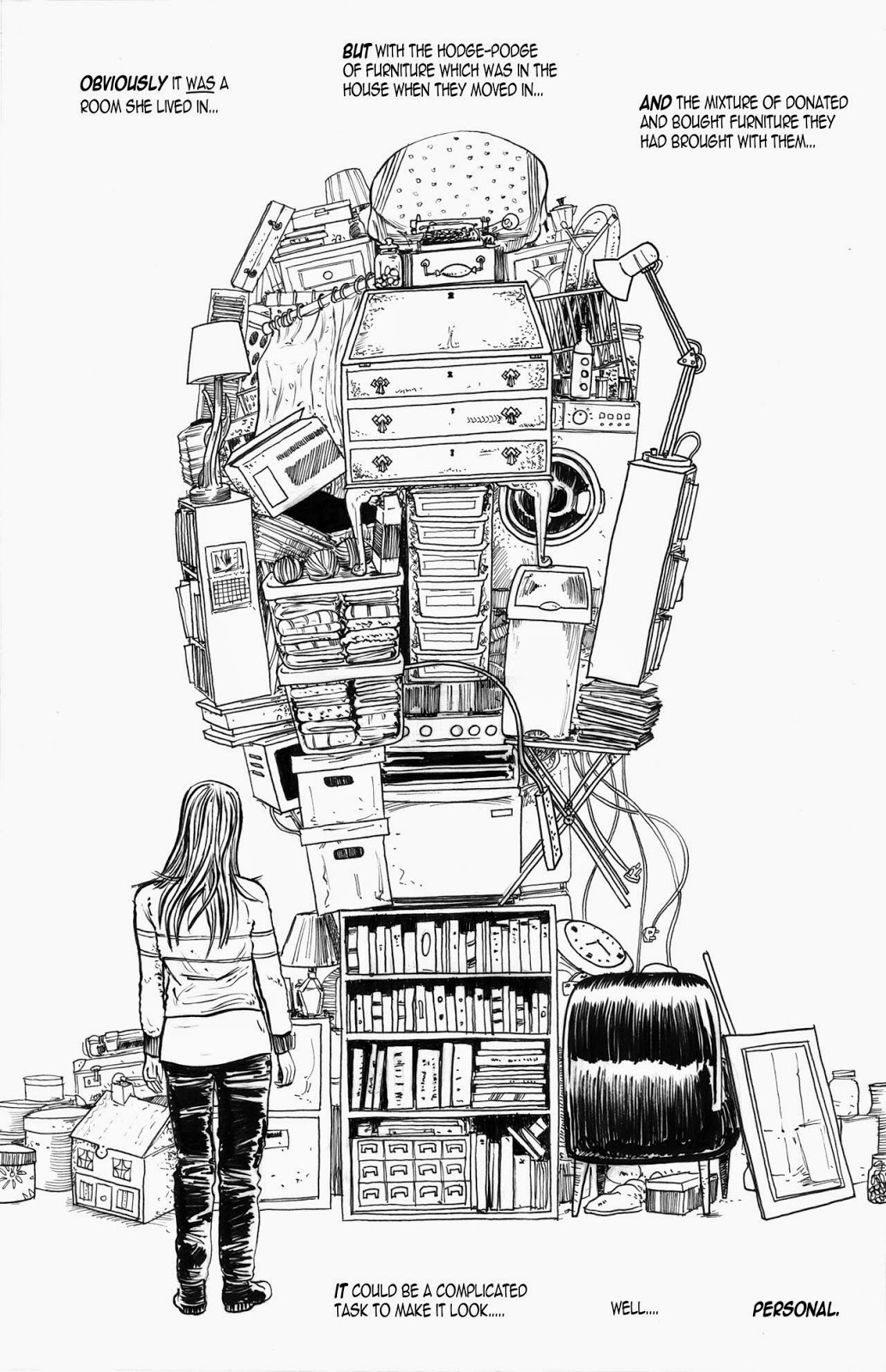
For the closing sequence we felt it would be potent to use visuals that illustrated the ‘unromantic walls of her real life’ These include representations of the Melancholic Wife’s furniture, bookshelves and many elements of her creative process.

Opening Sequence

For the opening sequence we have decided to try and use design imagery that already exists from the comic work.

Sadhbh had the idea of the camera following the line across a long pan which the character portraits emerge from and the titles sit above.

The Melancholic Wife Storyboards – Sixth Sequence

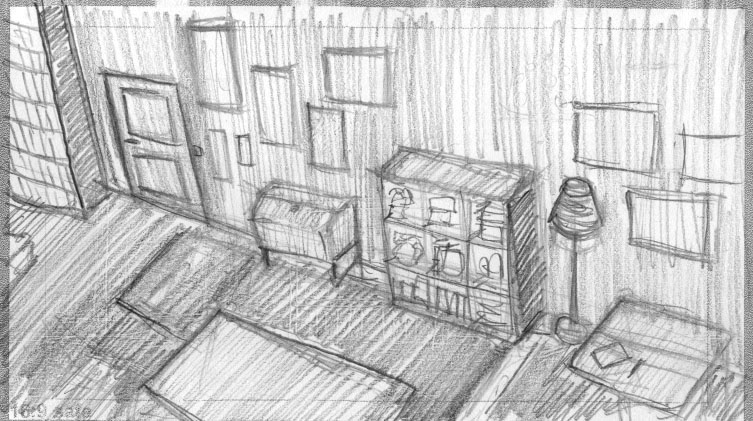
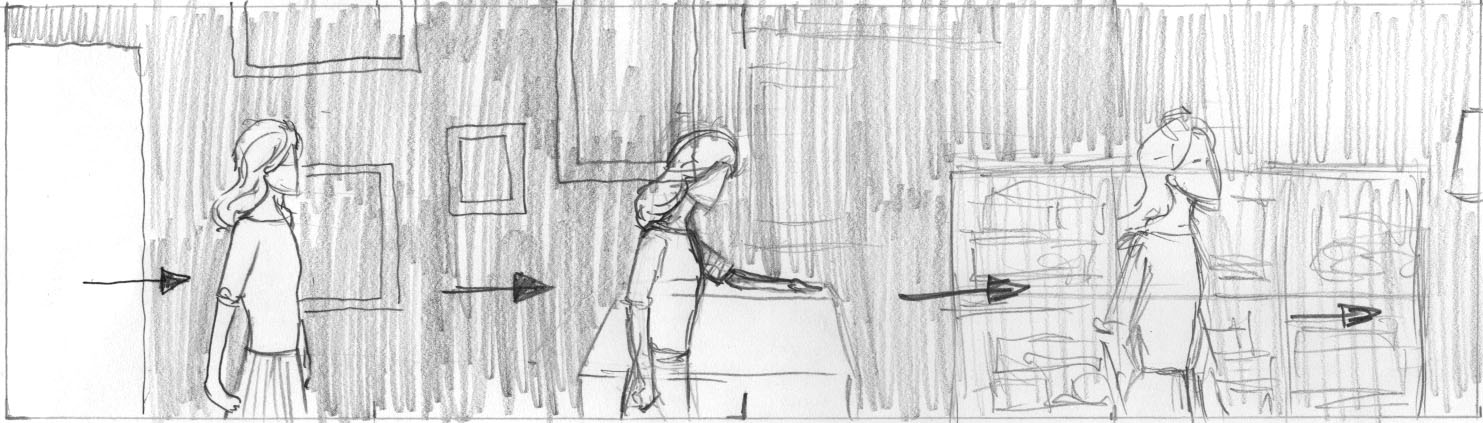
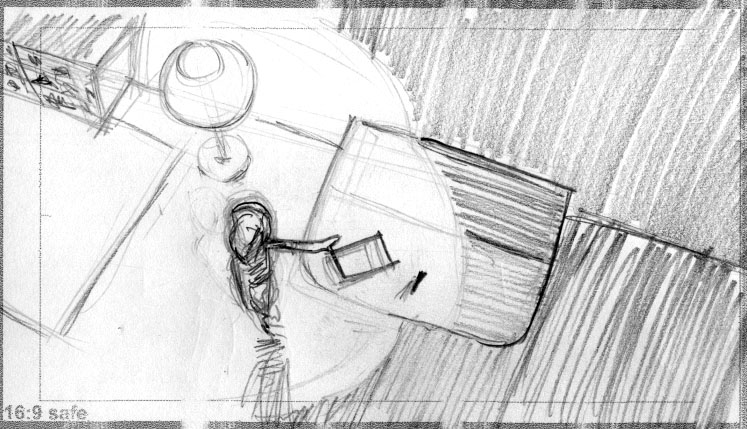
The Melancholic Wife re-emerges back into the real world, the ‘unromantic walls of her real life’. She moves through the room, giving us an opportunity to see the world she inhabits, the objects that make up her life. She turns on a lamp, she has gained illumination and she reaches for her journal to record it, ‘trying to hold on to the nuances of her transmutations’.

Sound Design – Music Soundtrack

Just as with voice over it feels imperative to be conscious of the power of music to shape the mood and reaction of an audience to the film. In practical terms, this being a student film and therefore on a limited budget, the opportunity to freely select music is limited by economics as well. We feel fortunate in some regards because we found that the tone and flow of the visuals married well with the Classical Music genre. But it feels important to note that this wouldn’t have been our first choice as in our minds the protagonist does inhabit a modern world with a modern taste in music, so compromise is necessary. The classical music genre has a longer history than most musical genres so there are more compositions that are license free with some performances coming under creative commons.


I used the website Musopen to explore options for the soundtrack. Musopen is a 501(c)(3) non-profit focused on increasing access to music by creating free resources and educational materials. They provide recordings, sheet music, and textbooks to the public for free, without copyright restrictions.

For the first drafts of the animatic, myself and Sadhbh chose Reverie by Debussy for the first act of the film before the Melancholic Wife chooses her own music. We felt this gave a good sense of the initial journey she embarks on. For the change moment we chose Wagner music, for the sense of drama and a journey, specifically from the opera Tannhauser. These two pieces acted as a starting point a placeholder to help visualise the film.

When it came time to consciously examine and choose the music, myself and Sadhbh decided to attempt to find female composers to try and rebalance the gender representation given the narrator is a male voice. Using Musopen again we discovered two compositions; for the main body of the film we selected a piece called Three Dramatic Etudes by Pandora Selfridge; for the change of tone we have picked a section from 4 Sketches, Op.15 by Amy Marcy Beach. We feel that the first composition is working well but that the second one may need further exploration as it may not represent enough of a positive tone shift.
Melancholic Wife Animatic Version 11

With this animatic I’ve added an opening and closing sequence to the film. The opening uses the cover illustration from the first zine collection of the short stories. The font is from the cover and website as well. The ending sequence uses pages and panels from the comic to give a sense of the wider world in which the Melancholic Wife exists.

Sound Design – Voice Over

My short film employs a voice over narration to work with the visual storytelling. This narration is an adaptation of the text narration of the original comic. In collaborating with Sadhbh we have tried to be conscious of the power of having a voice describing the story of our protagonist. There is a distance that necessarily exists because she is not speaking directly to the audience of her experience. We further wanted to explore this distance by having a male voice speak the story. Our reasoning behind this is a desire to investigate and play with the conventional dominance of men telling women’s stories. In societal terms the male voice can seem to lend an unconscious authority and we want to use this bias to support the telling of an unconventional story exploring the inner complexity of a woman’s experience.

From the research into my extended essay on the Essay Film genre I have learned of the opinion that voice over can communicate as authoritarian in film. Dictating to the audience what they should think and how they should feel about the accompanying visuals. I also want to be conscious of this by pursuing a storytelling tone to the narration. There will hopefully be a neutrality to it, a separateness which leaves room for the visuals to occupy its own space and leaves a space in-between for the subjective reaction of an audience to reside in.