Visual Reference – Source Material Overview

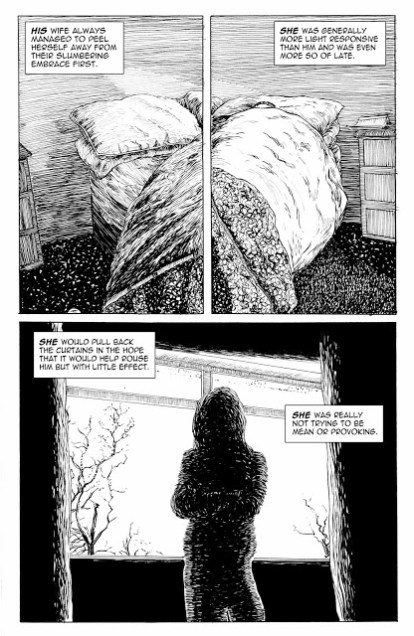
The source material for my film comes from a comic that I co-created with my partner, artist Sadhbh Lawlor. It’s from a series called The Melancholic Wife and her Perpetrating Husband, Sadhbh wrote the stories for the series and I illustrated them. Briefly, the artistic aim of the series is to explore narratives in a short story form and examine the use/misuse of simplistic labels to try describe the complexity of a whole person. There was a conscious decision made to not show either of the main characters faces in the comic so that the reader was encountering them through the words of the narrative, the label that is their names and the actions of the characters in response to situations.

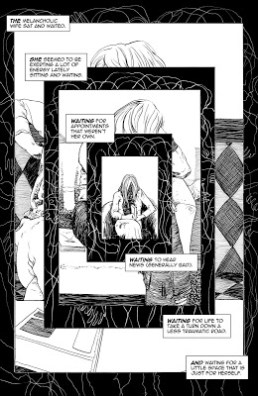
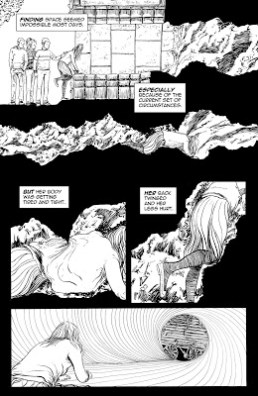
The Melancholic Wife has been the focus of four episodes of the series.


This is her first appearance in episode one.

 
Episode three.


An appearance in episode six, a Perpetrating Husband story.

  
Episode seven.

Story Development – Treatment

The Melancholic Wife Loves to Dance Short film treatment


A woman walks on to a white screen and tentatively begins to dance. Floorboards rise from below to meet her steps, making the screen darker until they swallow the woman in total black.


A carpet grows from the black and hands reach down to pull it up, revealing bare floorboards underneath. These are sanded and then varnished. A foot lands on the floor creating reverberations of sound. The sounds travel down and reach the woman who is standing below the floor. As they reach her the woman becomes distressed, she begins to hurry away in agitation, struggling to wrestle out of her coat. It drops to the floor as she hurries away trying to escape the sound. She comes to a door, opens it and steps through into a white room.


As the woman closes the door behind her, ghosts of herself appear and she moves to embrace them. As she does this sinister hands reach out from her shadow and pull her aggressively away into blackness. She manages to bring a ghost with her into the black.

A spotlight comes on in the dark, the light it shines on the floor is in the shape of a house. The woman is lying curled up on the floor. The ghost rises from her arms and she stands, she reaches into her pockets, takes a pair of earphones out and places them in her ears. Different music plays quickly until she selects one song. She grounds her feet, feeling carpet between her toes. The spotlight narrows and centres on the woman, entering into her body making her the only light source. The woman begins to move and first with her fingers then with her whole body she draws a landscape in light that surrounds her in the darkness, strengthening her. The ghost dances through the lines of light disappearing into it. When she brings her movements to a close she strides confidently towards the camera and as she fills the screen we see a representation of her creation on her clothes.

The task to try and tell the comic narrative in short prose form with respect to film is challenging and interesting. In adapting for a different media, different elements of the story naturally come in to focus. For instance the use of black and white on a comic page has to bear in mind not only the composition of a single panel but also the look of the page as a whole as a reader encounters both. The composition for film feels much more related to time. For film I’m discovering the need to respect timing and motion at this initial story stage. A reader is in control of the timing of their reading, while a film viewer is at the mercy of the filmmaker. I think some of the ambiguity of the comic needs to be cleared to create a strong film narrative. Actions and movements that can be suggested in the imagery of the comic have to be definitively nailed down.


Character Development

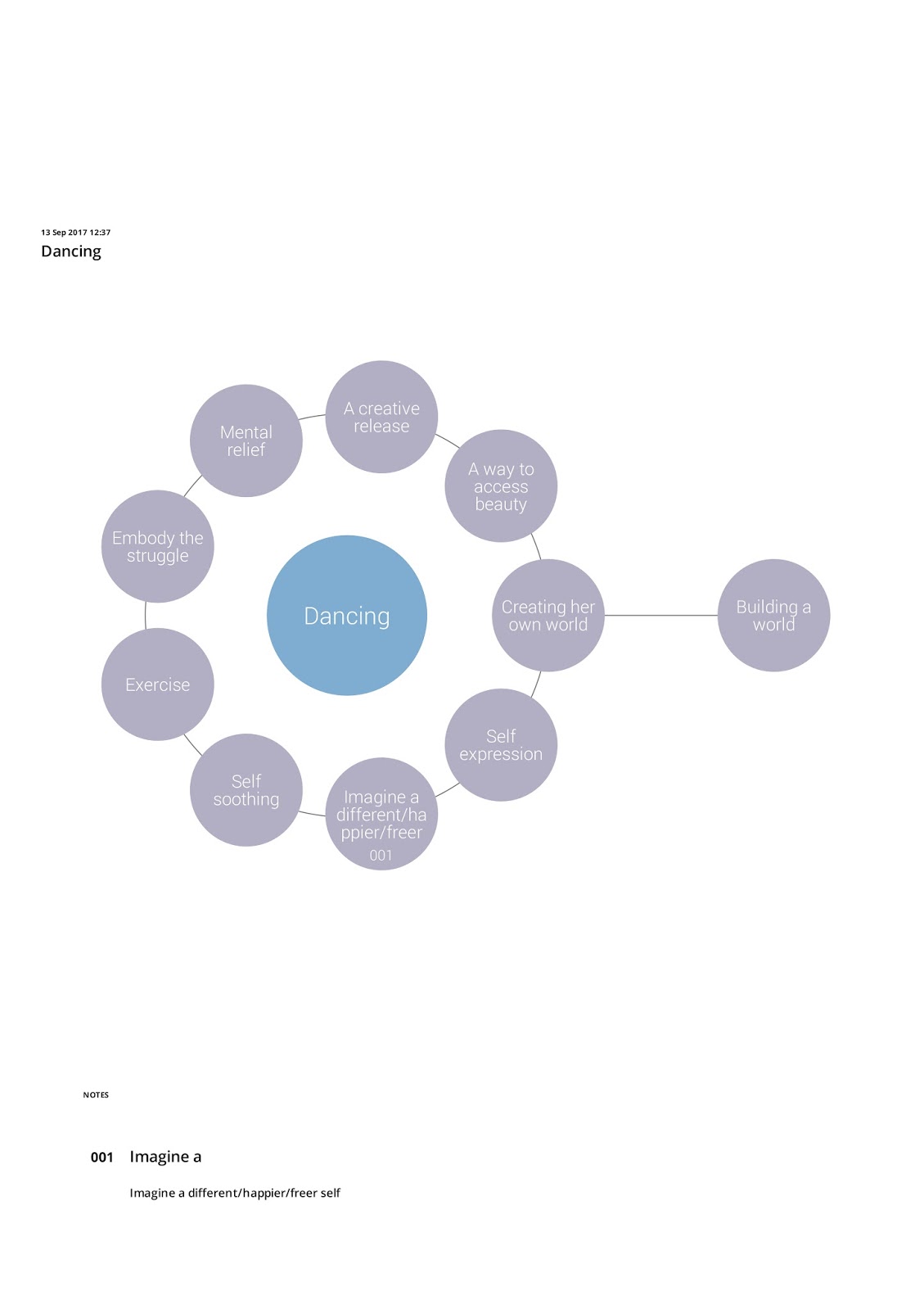
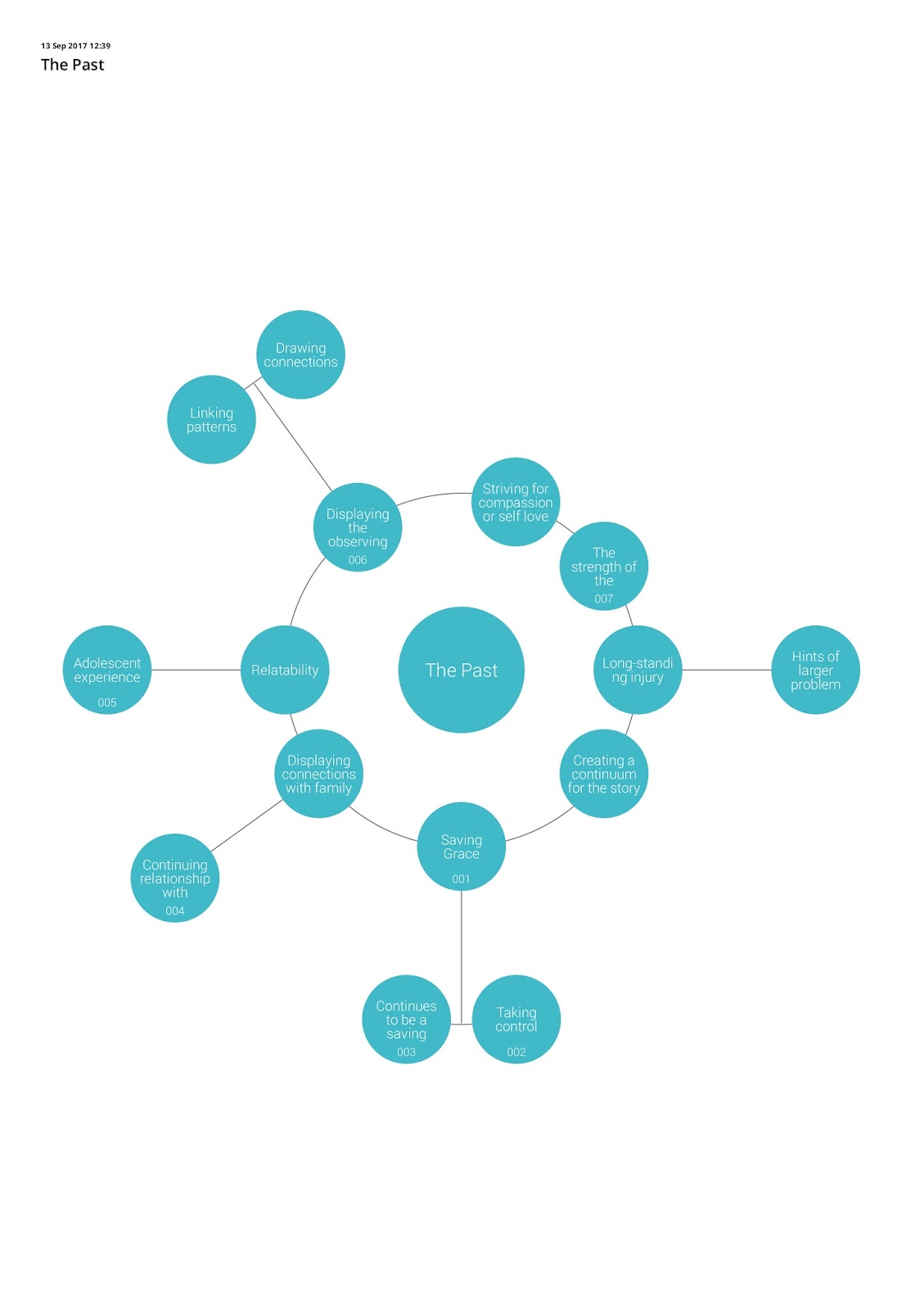
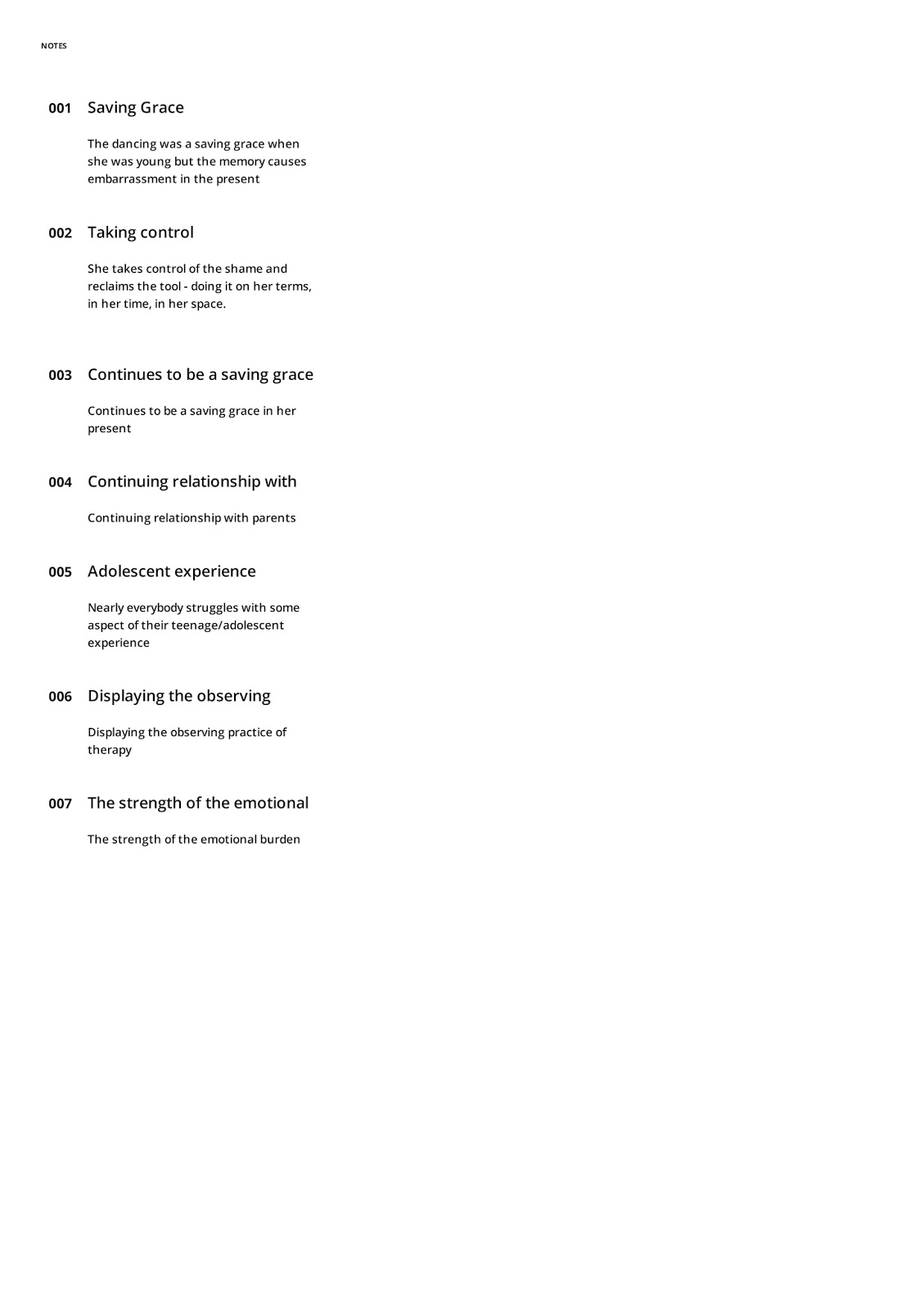
In order to help develop and understand the motivations of the Melancholic Wife, Sadhbh Lawlor the writer of the original comic script, created mind maps broken down into the three main contributing themes that helped create the original story. These are; Dancing; the Past; and Transmutation.

Story Development – Controlling Idea

As part of the process of developing our story ideas for film we have been introduced to exercises and concepts from the book Story by Robert McKee. One of these concepts is something called the Controlling Idea, which on first hearing made me balk somewhat at the idea of being ‘controlling’ but it has helped me understand the importance of having a strong singular intention at the heart of the film to help inform, support and inspire other threads that arise.


A CONTROLLING IDEA may be expressed in a single
sentence describing how and why life undergoes change from one
condition of existence at the beginning to another at the end.
Story by Robert McKee, pg. 115


It consists of value and cause, identifying the positive or negative outcome or value at the climax of the film and the reason that value changed to that state. So for my film I went through a few iterations before coming to the final idea. These included;


Creative self-expression is achieved because the protagonist accepts her past.


Self-determination is restored because the protagonist uses self-expression to define her own reality.


Vulnerability is accepted because the protagonist creates beauty from the darkness.


While I felt that these expressed something within the story, I didn’t feel like they were communicating the nuance of the original piece, the seeking for balance, not an outright victory in the situation because that is impossible in the wider context. So the final one reads as;


The protagonist brings herself to a state of temporary existential
equilibrium through employing the tools of creative self-expression.

This sentence describes for me the struggle that happens throughout the story and helps me to keep in mind that in the end it’s not about some form of a victory, it’s about the process of self-expression as an ongoing resource.


Main Film Proposal

For the beginning of the BA course we were asked to prepare a presentation to introduce ourselves and our work. We were also asked to present our ideas for our main film project, our solo film, to be produced by the end of the year. For my film I have chosen to adapt a short comic story from the web-comic I created in partnership with my partner, writer/artist Sadhbh Lawlor.

The web-comic is called Splitting Borders and the story is part of a series within it, The Melancholic Wife and her Perpetrating Husband. The story, episode five in the series, was written by Sadhbh and illustrated by myself. I have Sadhbhs permission to adapt it for animation and I will be keeping her informed of the adaptation process to ensure it stays connected to her original intention for the story and our collaboration.

For the presentation I created a motion comic of the original illustrations with a scratch track of the text voiced by myself.

The Melancholic Wife and her Perpetrating Husband

The Melancholic Wife and her Perpetrating Husband emerged out of the ongoing sequential work of Splitting Borders. It came from a desire to explore narratives in a short story format and examining the use / misuse of simplistic labels to try to describe the complexity of a whole person.

Each episode centres alternately on the wife and then the husband, the scripts were solely written by Sadhbh Lawlor and there have been seven episodes to date. The first four episodes were DIY published in zine form in 2015.

Episode 1

Episode 2

Episode 3

Episode 4

Episode 5

Episode 6

Episode 7


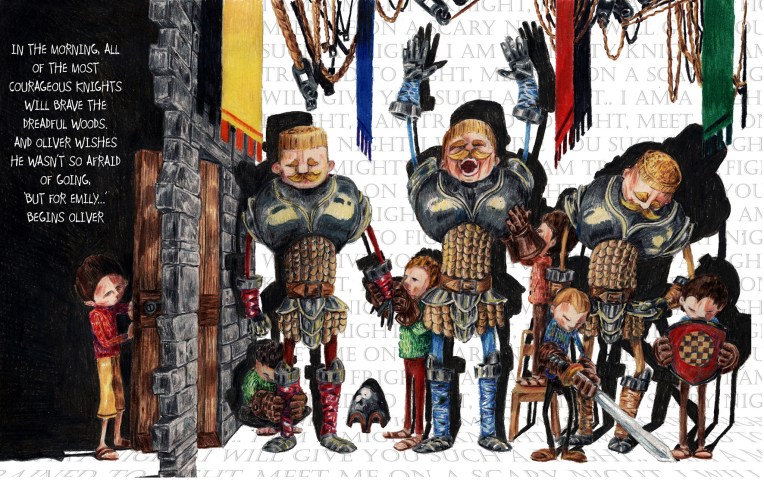
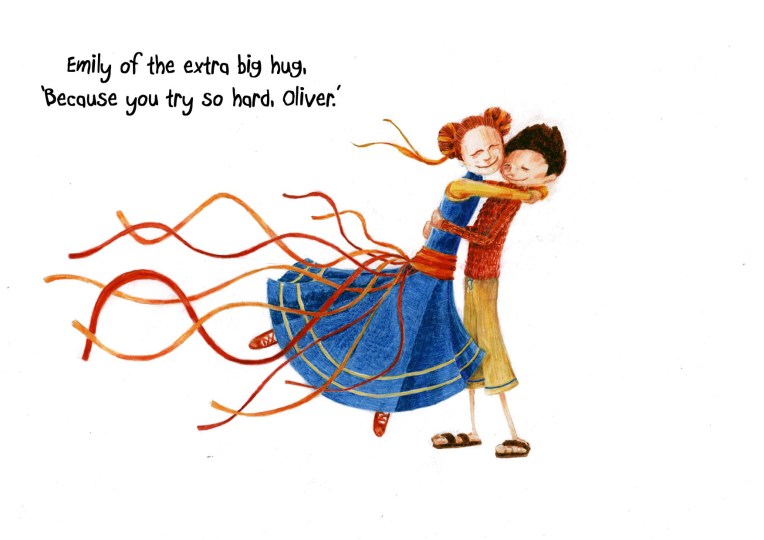
Oliver & Emily in the Frightful Forest

A picture book concept for five to eight year old’s. Set in medieval times, Oliver is a knight in training and his brave friend Emily goes missing in the Frightful Forest.

What will Oliver do next?

SET Issue 6

SET is an occasionally published zine concerned with the relationship between cinema and its architecture. Focus is aimed primarily on films, which are affected significantly by a singular set or location.

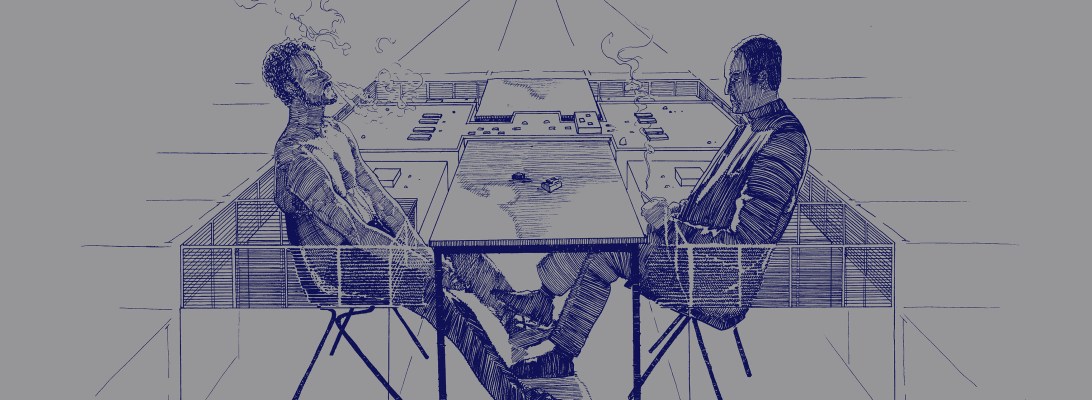
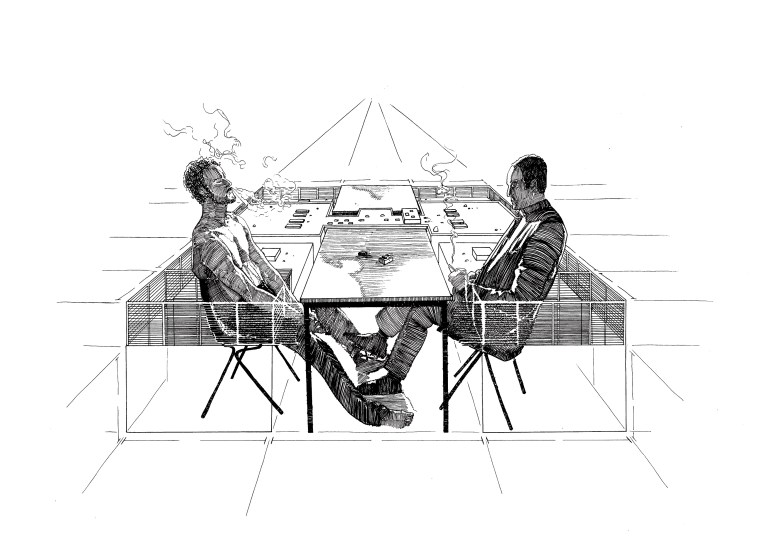
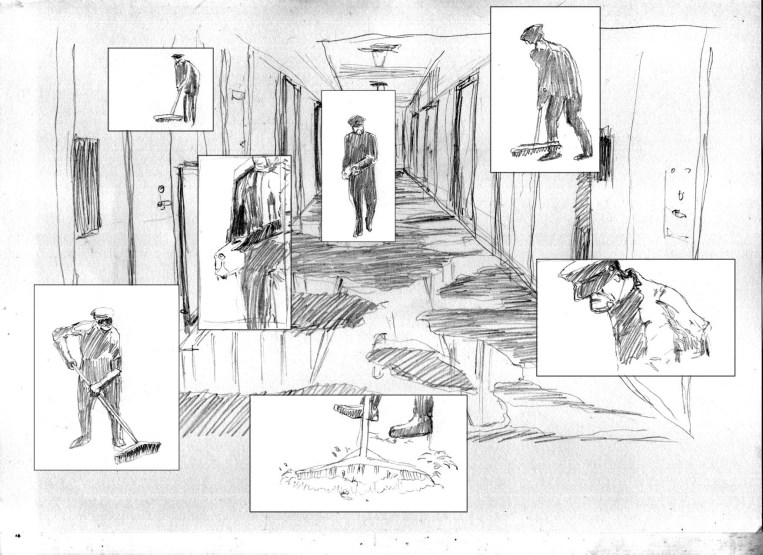
In Issue 6, Fionnuala Parfrey writes about Steve McQueen’s 2008 film Hunger and looks at the poetics and politics of form within the Maze Prison. To accompany this, I was asked to produce an illustration of the film’s key scene.


hunger_004
Rough Design
hunger_005
Finished Pencil
hunger_001
Finished Ink
hunger_003
Alternate Rough Concept
hunger_002
Alternate Rough Concept