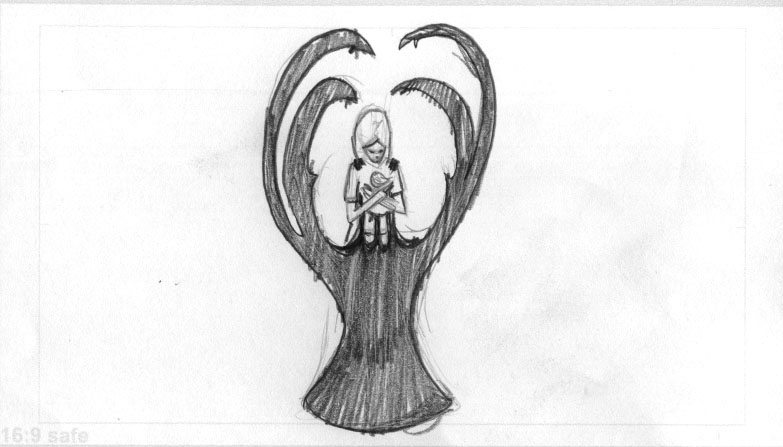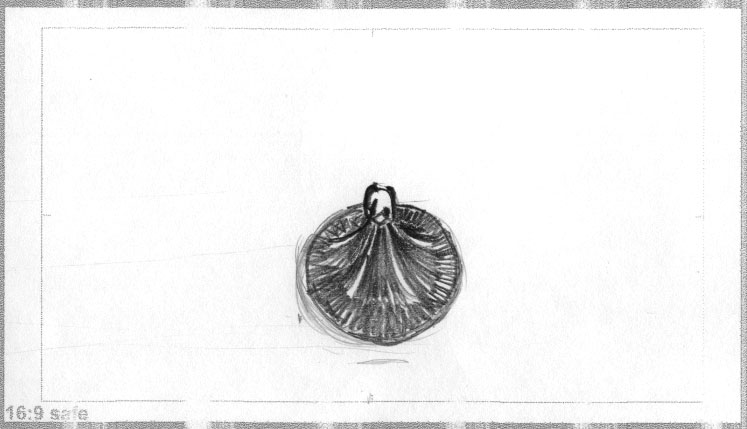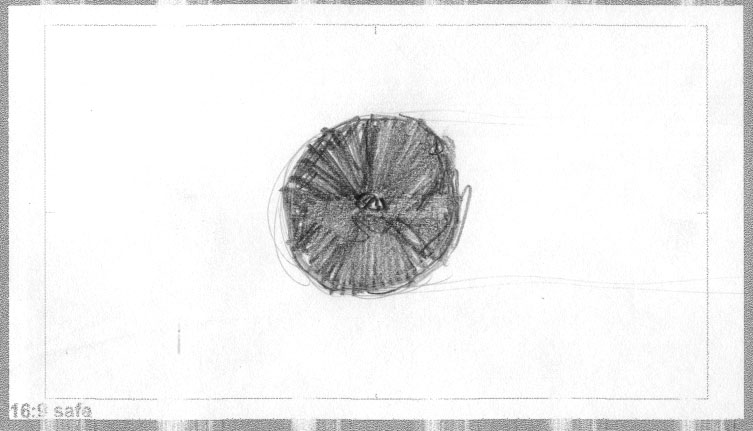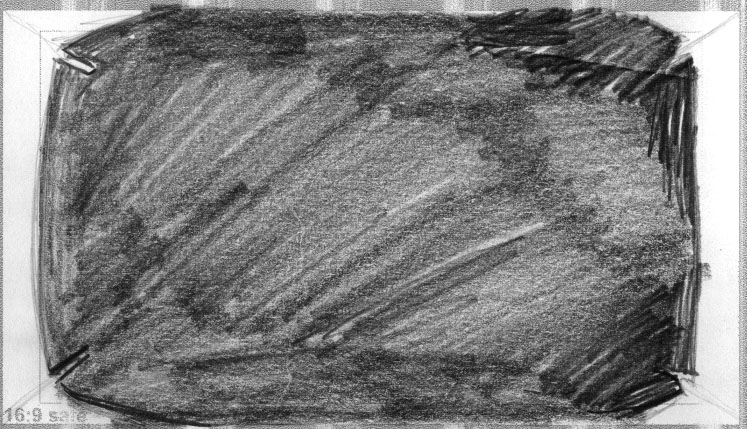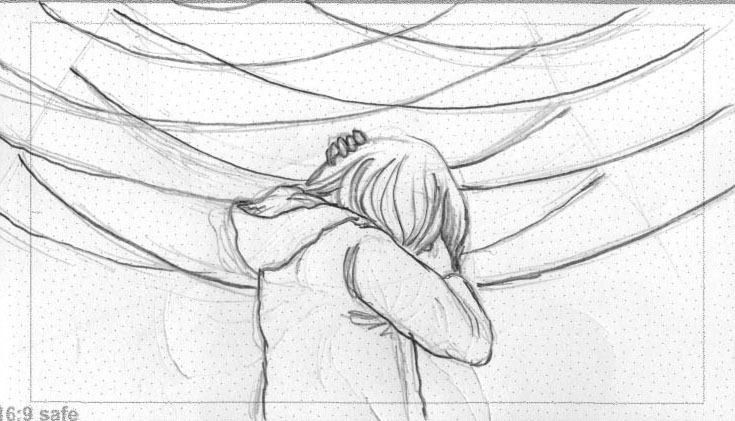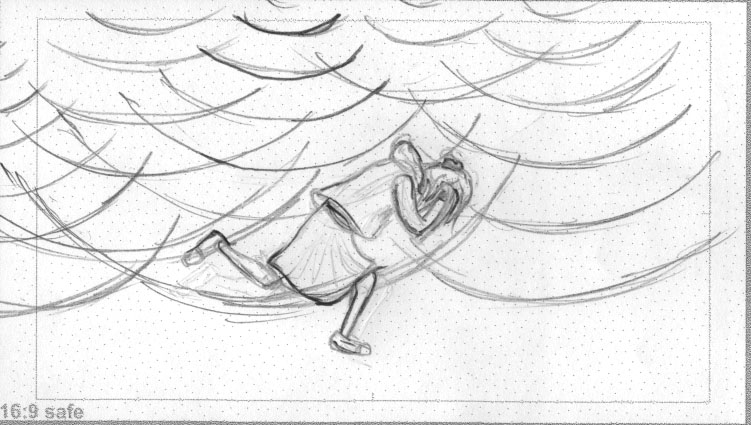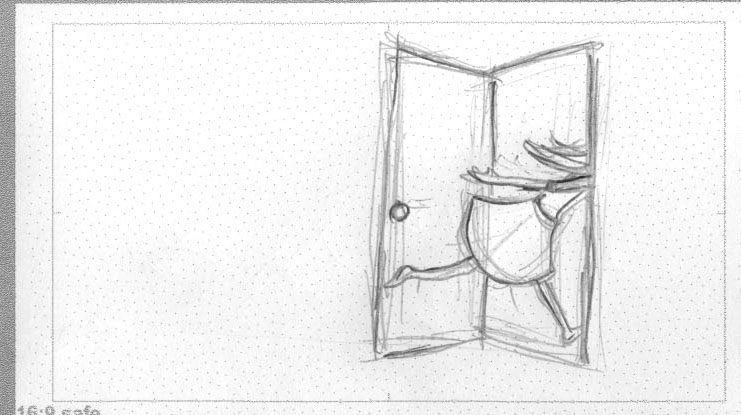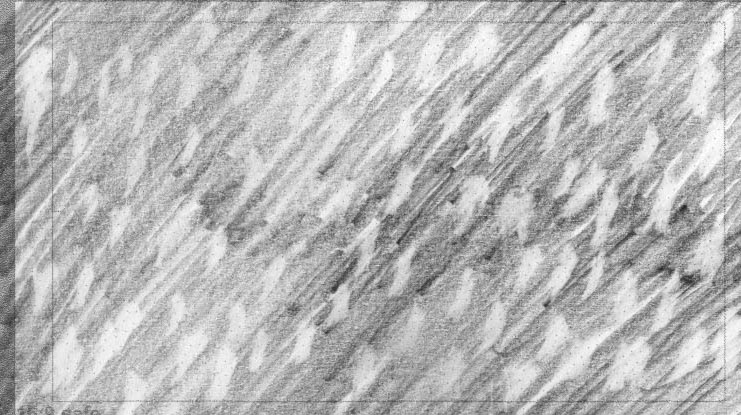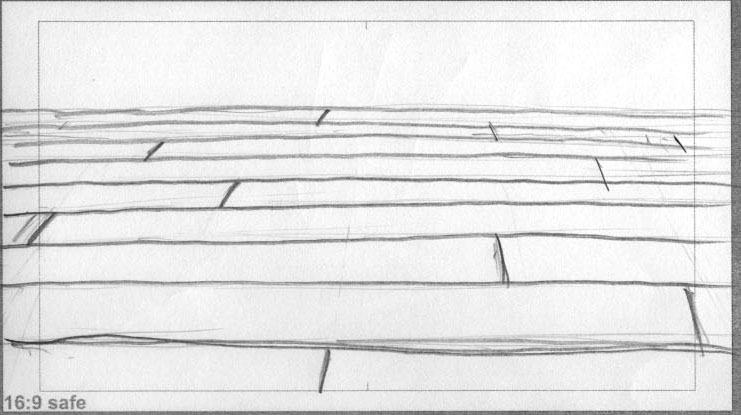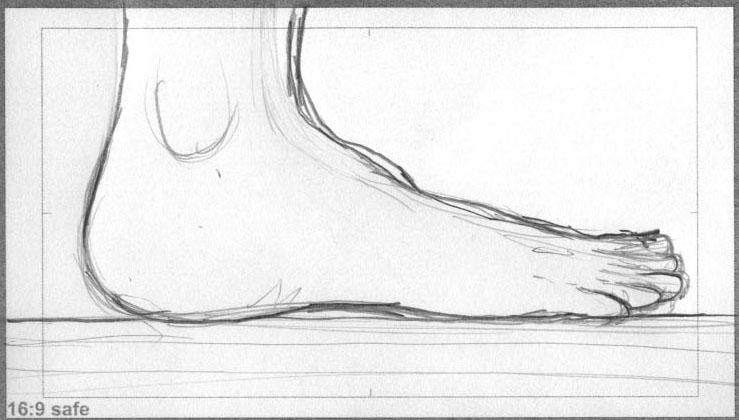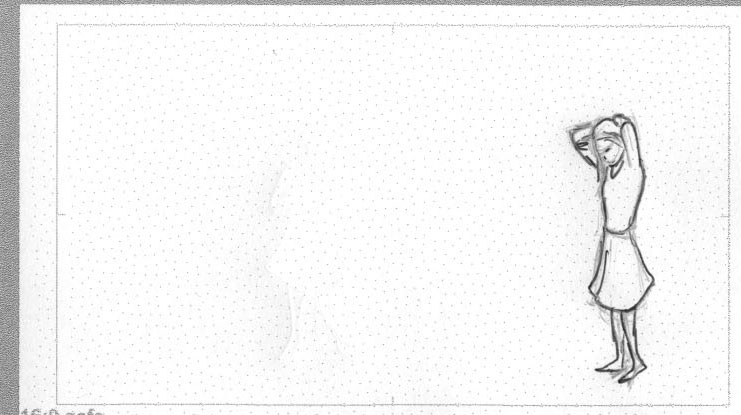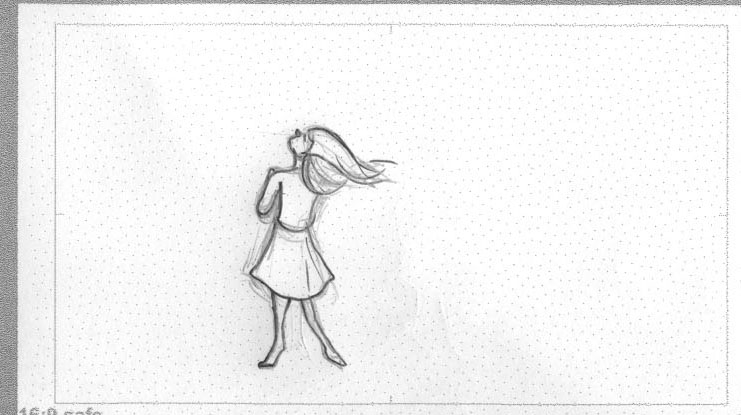
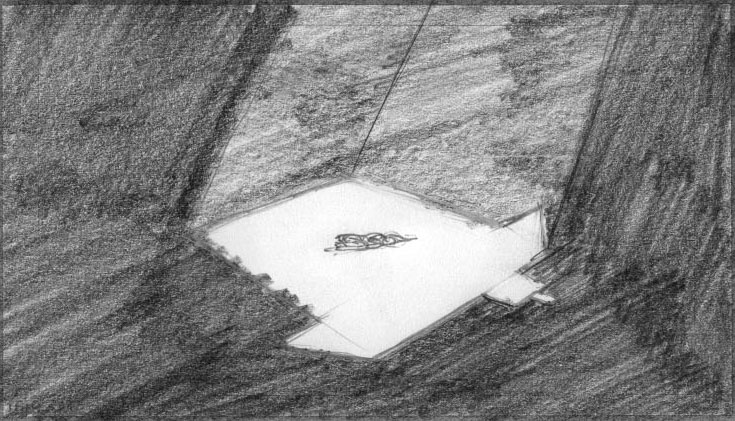
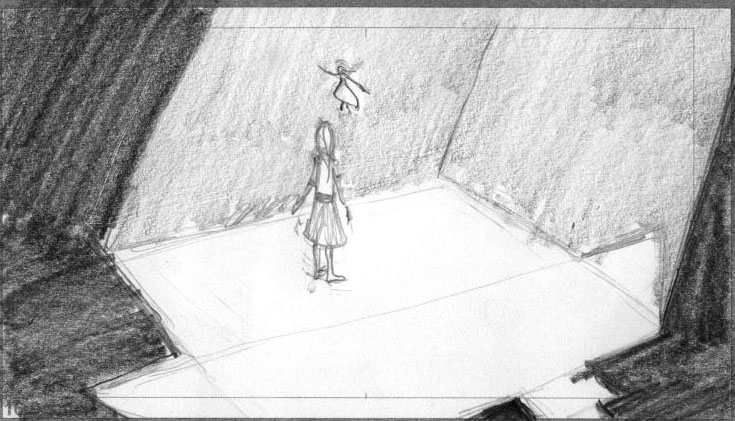
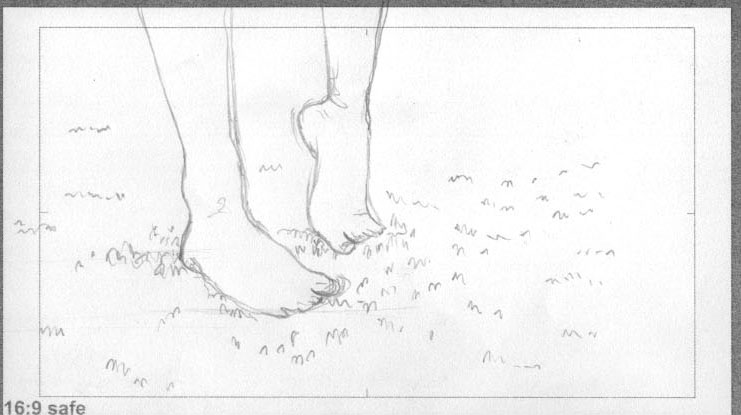
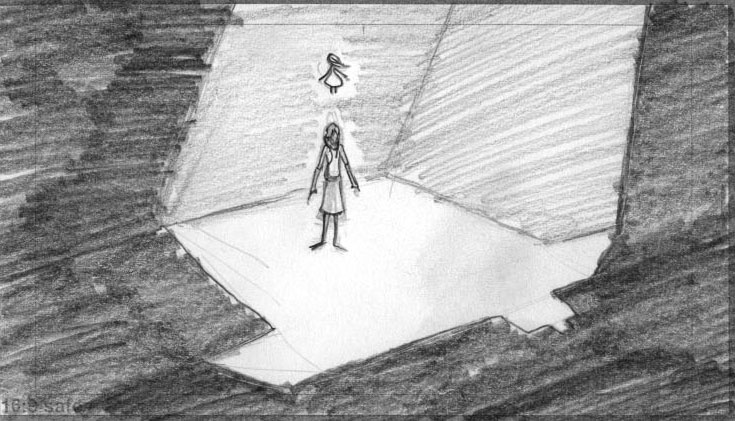
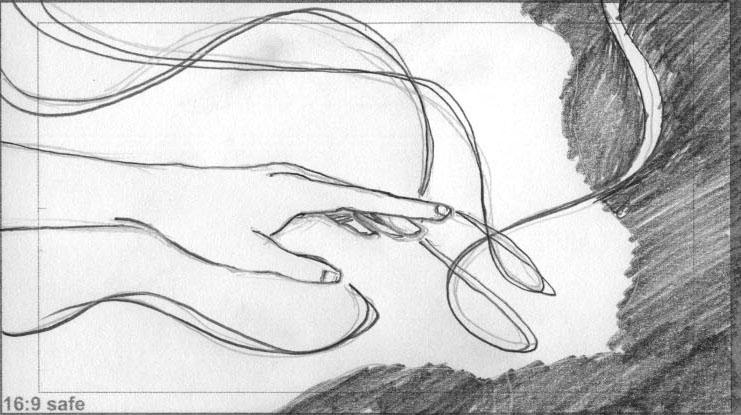
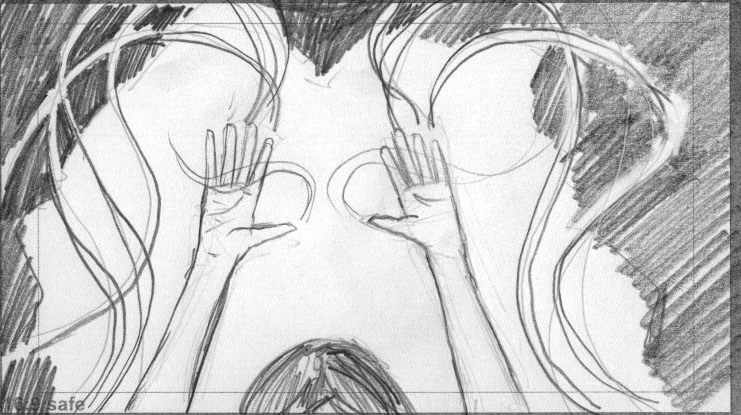
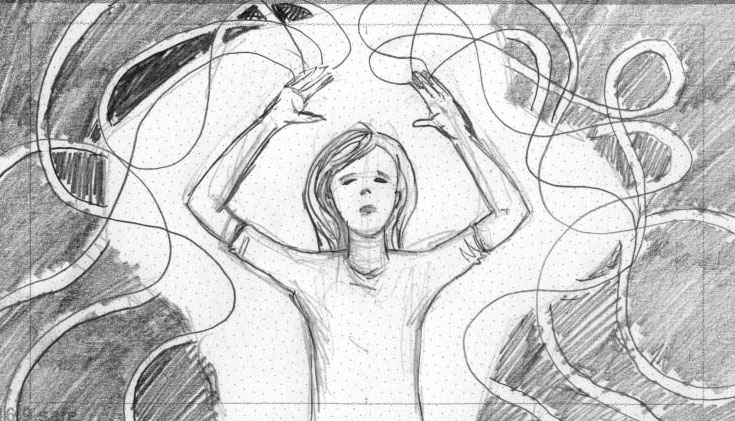
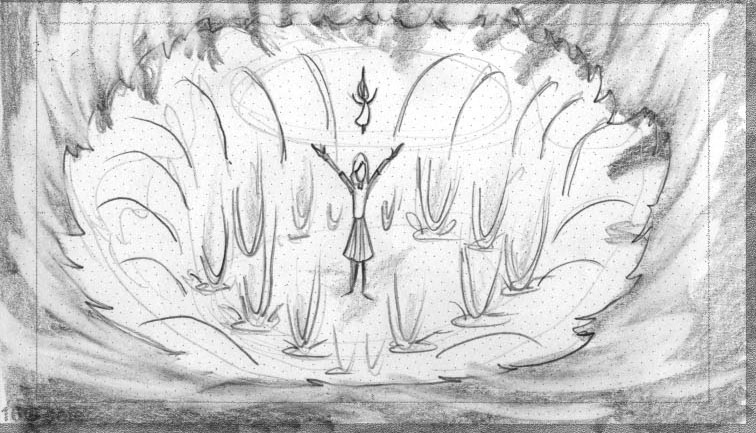
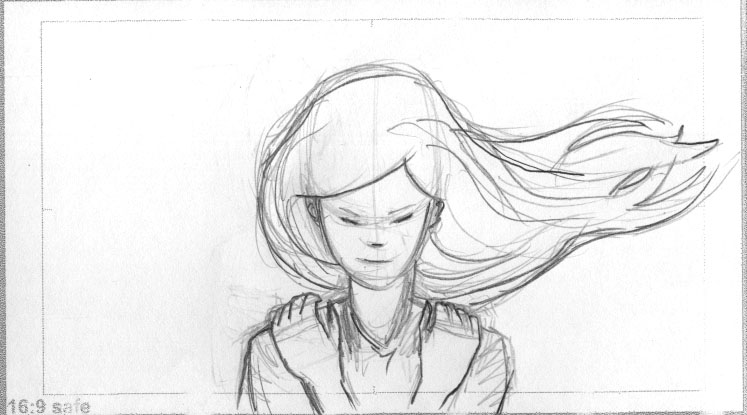
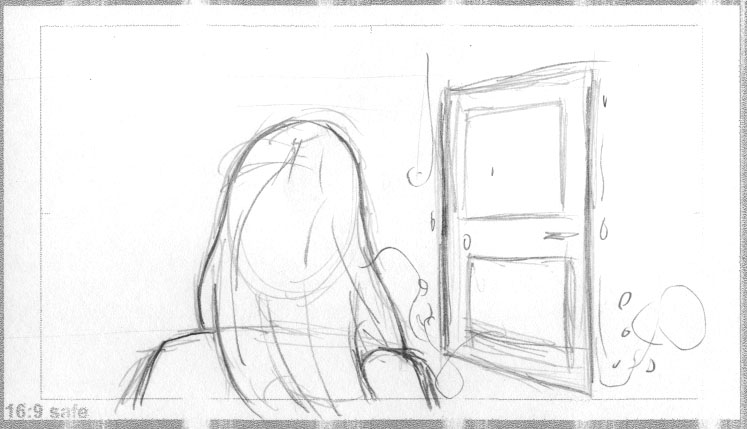
The lights come on and the Melancholic Wife must pick herself up off the floor and contend with the darkness of her melancholy again. She has managed to bring one of the ghosts of her former self along with her into this new arena of contention, the ghost floats free, still dancing. The Melancholic Wife draws the spotlight into her, assimilating its energy inside herself. She uses this energy to access her creative self expression, beginning to dance, move and project the light into the darkness, taking ownership for the moment of the space. The light, the white transcends the black, the Melancholic Wife and the ghost disappear in the brilliance as they join together. She pauses for a moment, honouring the coming together, she can bring the lesson which the ghost had to teach her with her back into the unromantic walls of her real life through the door which appears from the last vestiges of light.
Main Film
Essay Film Research
From the initial research for my extended essay I decided to further investigate essay films as a potential topic. I read the following definition in the book Essays on the Essay Film by Nora M. Alter and Timothy Corrigan (2017);
“characteristics of the essay film include the blending of fact and fiction, the mixing of art- and documentary-film styles, the foregrounding of subjective points of view, a concentration on public life, a tension between acoustic and visual discourses, and a dialogic encounter with audiences.”
The particular facets that struck a chord for me with my own film were the foregrounding of subjective points of view and a dialogic encounter with audiences. Though other elements also resonated including; the blending of fact and fiction and a tension between acoustic and visual discourses. I felt that approaching an investigation of my film through the lens of these aspects would help to advance the creative potential of the film.
So for further reading I researched other titles including; How the Essay Film Thinks by Laura Rascaroli; The Essay Film: From Montaigne after Marker by Timothy Corrigan; and journal articles; The Essay as Form by T.W. Adorno; and In Search of the Centaur: The Essay Film by Philip Loparte. Laura Rascaroli also had a number of relevant journal articles.
Mid-way point Animatic
With this new update I have;
- Changed the narration scratch audio to try and suit the tone of the present visuals more accurately. This audio though feels slower and will need to be updated again. It might be time to approach a professional at this point to begin to lock down the timings.
- Taken away the textured background in the first sequence to make space for another layer of rising floorboards that hopefully then creates a sense of the Melancholic Wife being swallowed by the darkness as the two layers of floorboards open up and she falls between them.
- Scratch sound effects have been added.
- Minor changes and additions to scenes for clarity of storytelling and timing, for example a truck in has been added to the final scene to highlight the notebook and pen on the table.
The Melancholic Wife Storyboards – Fourth Sequence
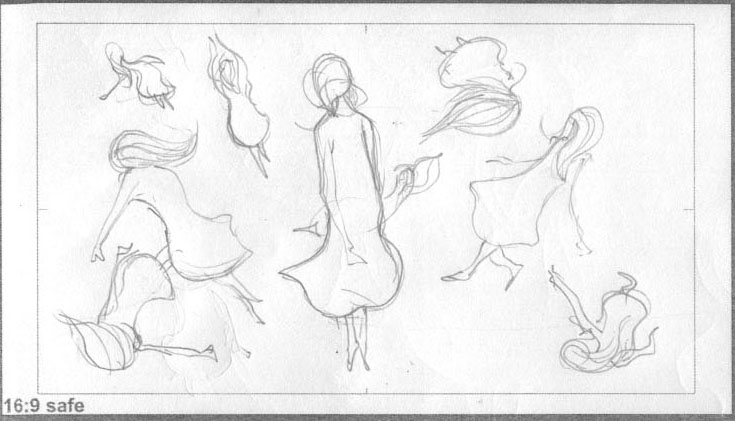
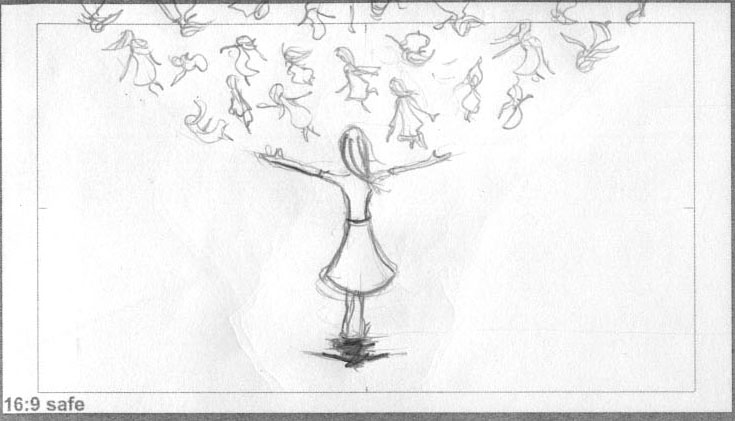
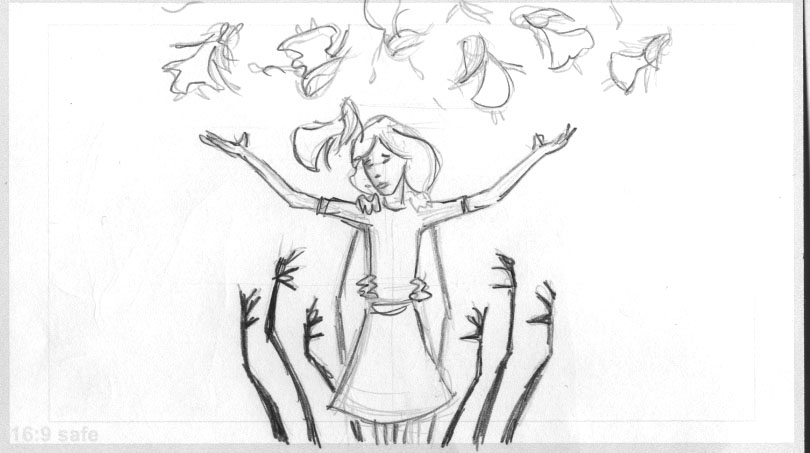
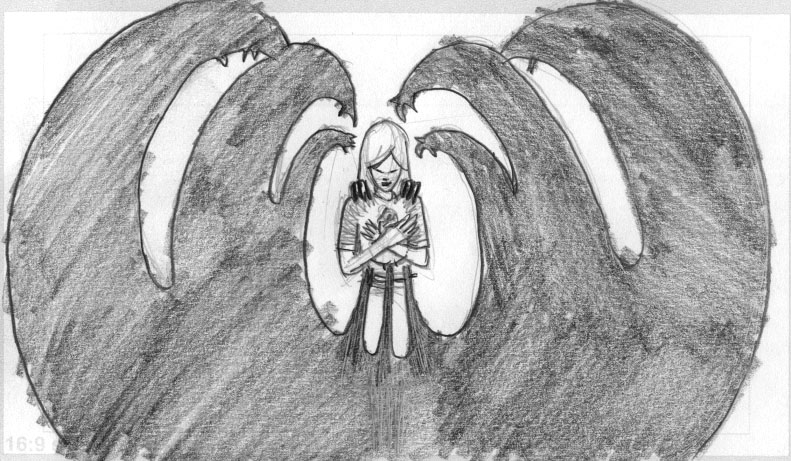
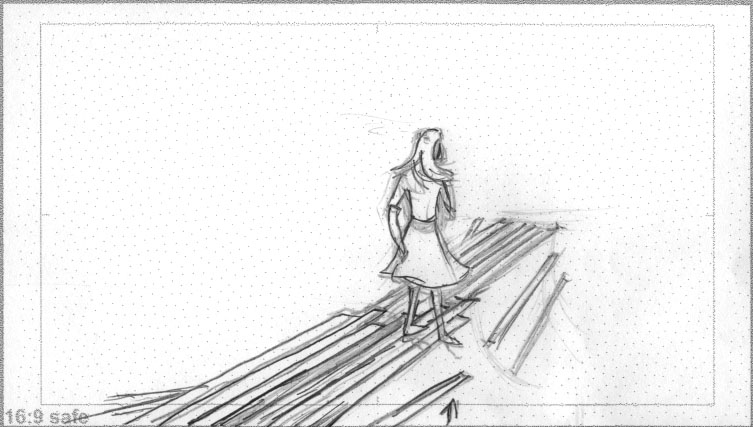
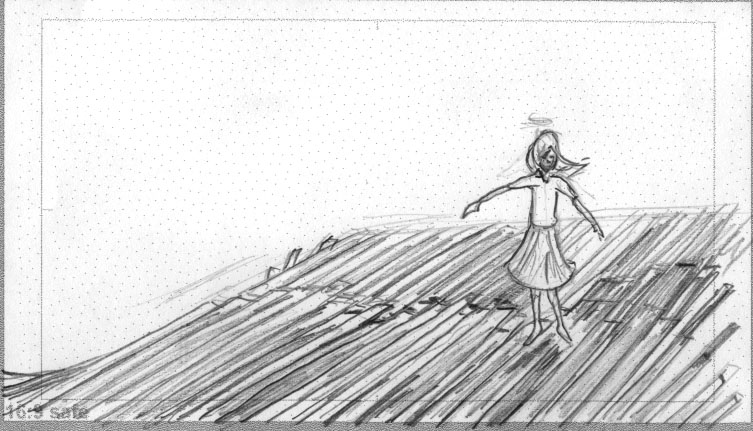
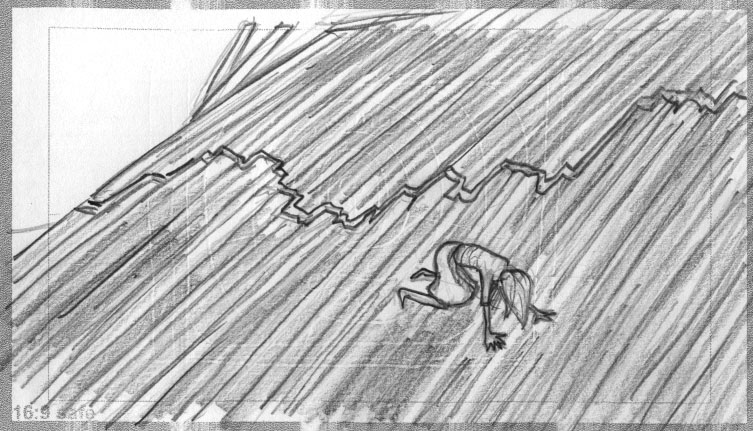
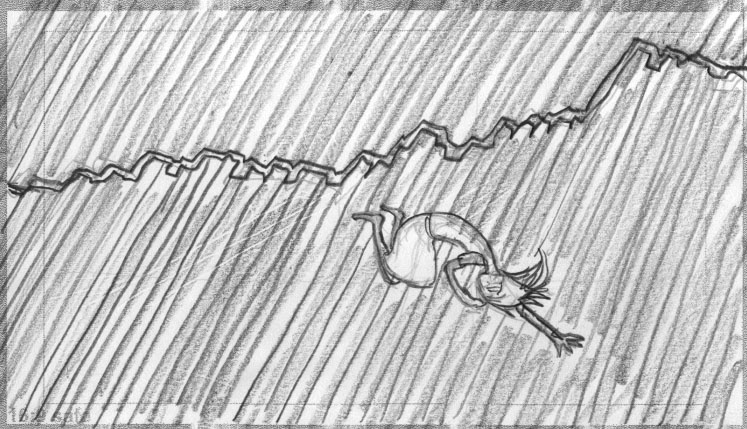
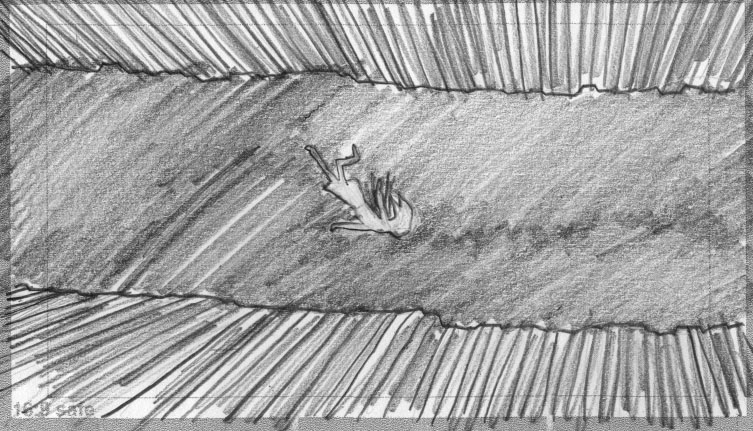
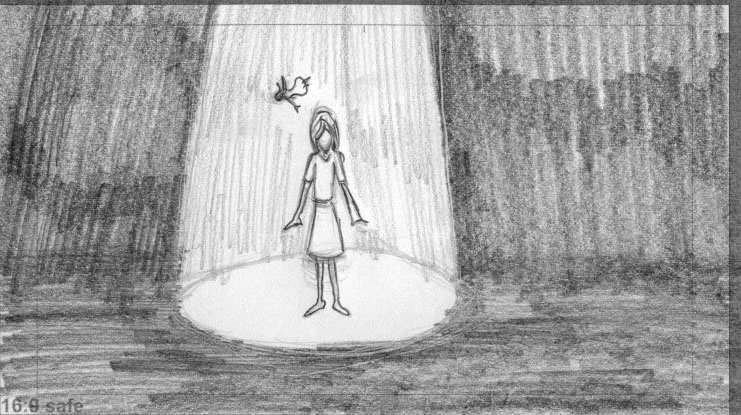
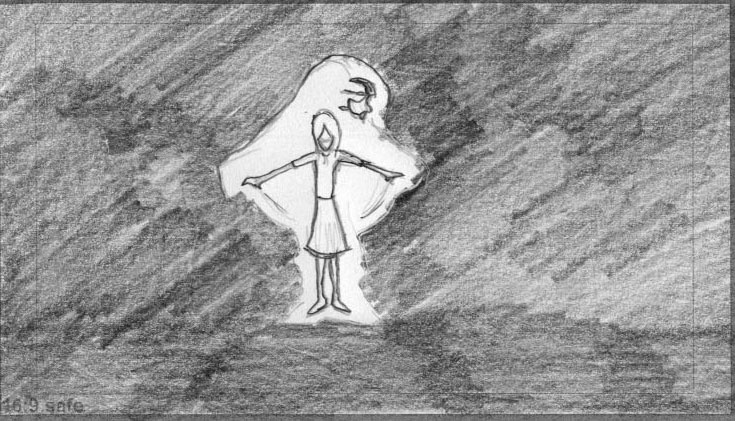
The Melancholic Wife has escaped the sound waves of remembered shame into a new space in her memory. Ghosts of her teenage self appear above her, expressing freedom and joy. She spreads her arms in an attempt to embrace them, to embrace herself. But the shadow of her shame is still with her. It rises, pulling her back down into the depths of her despair. The Melancholic Wife reaches out and grasps one of the ghosts, taking it with her as she is consumed. The shadow grows, submerging not only her but the entire screen.
Extended Essay Initial Research
As part of the Animation Research and Practice module I have to write an extended essay on a specific topic. This topic must bear relation to the main film project, it’s theme, subject matter or method employed. My initial ideas have included; investigating the use of dance to communicate emotions in film; examining the representation of female characters by male creators; the complexity of representing psychological challenge in a nuanced and respectful way; the hero’s journey told through non-traditional narratives.
Using the Wolverhampton College online library I began researching possible books and papers in relation to these areas. Some of the titles included; Understanding Animation by Paul Wells (2013), specifically chapter 5, issues in representation and Animating Film Theory, edited by Karen Beckman (2014). It was in this second title that I was introduced to the concept of the essay film form and for me it’s description aligned with my own main film project.
Updated Animatic
For this updated version of my animatic I have addressed some of the issues that I didn’t feel were working from the first draft.
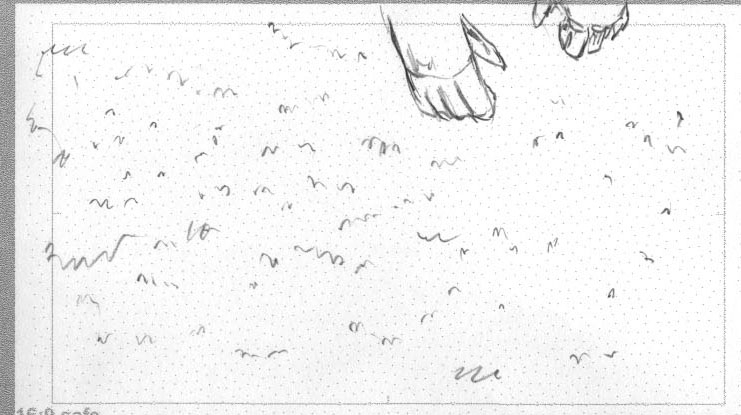
- I added a textured background wall to the first sequence to explore what it might add to the piece, I think it helps to give some context to the action.
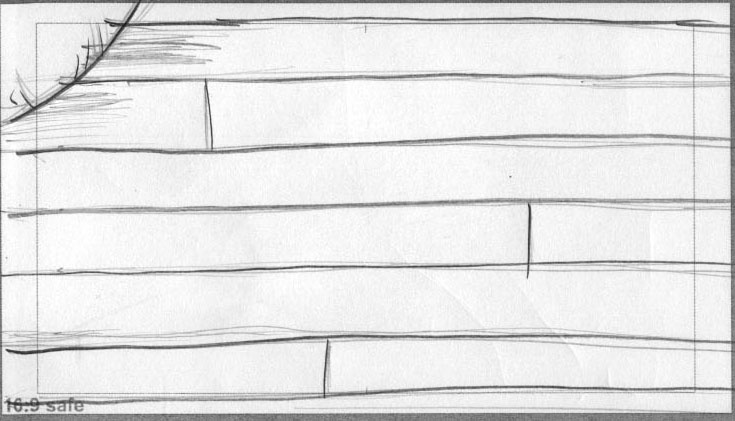
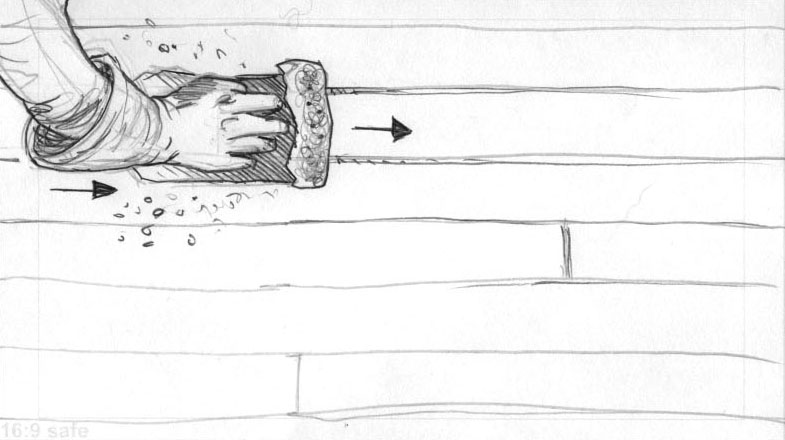
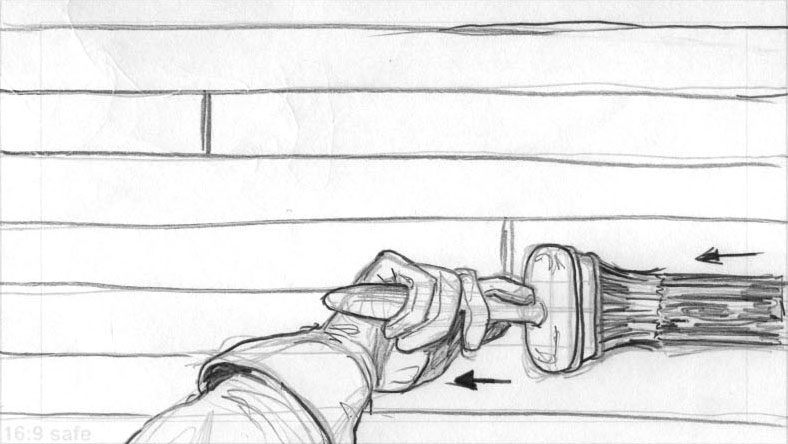
- For the sanding and painting sequence I had, before producing the first storyboards, imagined it as an overhead shot but I struggled to visualise this at first, wrestling with the idea of making it as readable as possible. With feedback from Ed, I returned to my original idea for this animatic and am pleased with the results.
- From the first animatic it became apparent that for the film adaptation I would need to signify the learning that the Melancholic Wife takes on that enables her to overcome and access her power in the last sequence. In consultation with Sadhbh, we decided that we would explore the concept of her taking one of the ghosts with her, accepting this avatar of her teenage self into her arms as she’s swallowed by the blackness.
- The final scene has also been changed for this version. Now the Melancholic Wife emerges from the dream space through a door created from the light of her self expression. She re-enters the ‘unromantic walls of her real life’, a space signified by objects and ephemera from the comic stories, ‘striving to hold on to the nuances of her transmutations’ by taking up a pen and journal.
The Melancholic Wife Storyboards – Third Sequence
The Melancholic Wife Storyboards – Second Sequence
The Melancholic Wife Storyboards – First Sequence
The Melancholic Wife enters onto a white screen and begins to dance. As she turns back on herself floorboards rise from the white space below her becoming a floor beneath which creaks and overwhelms her with their noise and darkness.
The Melancholic Wife uses dance to cope with her dark and troubled thoughts. But within her is a memory of dancing that feels embarassing and challenges her coping skills and the film will chart the journey through this memory. The rising floorboards of this first sequence represent the difficult memory rising from her subconscious. She is unable to fight off the hard feelings and she falls, descending into the void of shame.